401(k) Tax Credits in 2026: What Practice Owners Can Claim and When a QACA Makes Sense

The three credits
Startup cost credit. Up to $250 per eligible non-highly compensated employee, with a $500 minimum and $5,000 maximum per year, for three years. It covers plan setup, administration, and employee education.
Employer contribution credit. Up to $1,000 per eligible employee for the money the practice contributes. It's 100% in years one and two, then drops to 75%, 50%, and 25% in years three through five. It applies to employees under an inflation-indexed wage threshold that started at $100,000.
Auto-enrollment credit. $500 a year for three years if the plan auto-enrolls employees. Most new plans must auto-enroll anyway. Practices with 10 or fewer employees or open less than three years are exempt.
The catch: you can't claim the startup credit if you've had a plan, including a SIMPLE IRA or SEP, covering the same employees in the last three years.
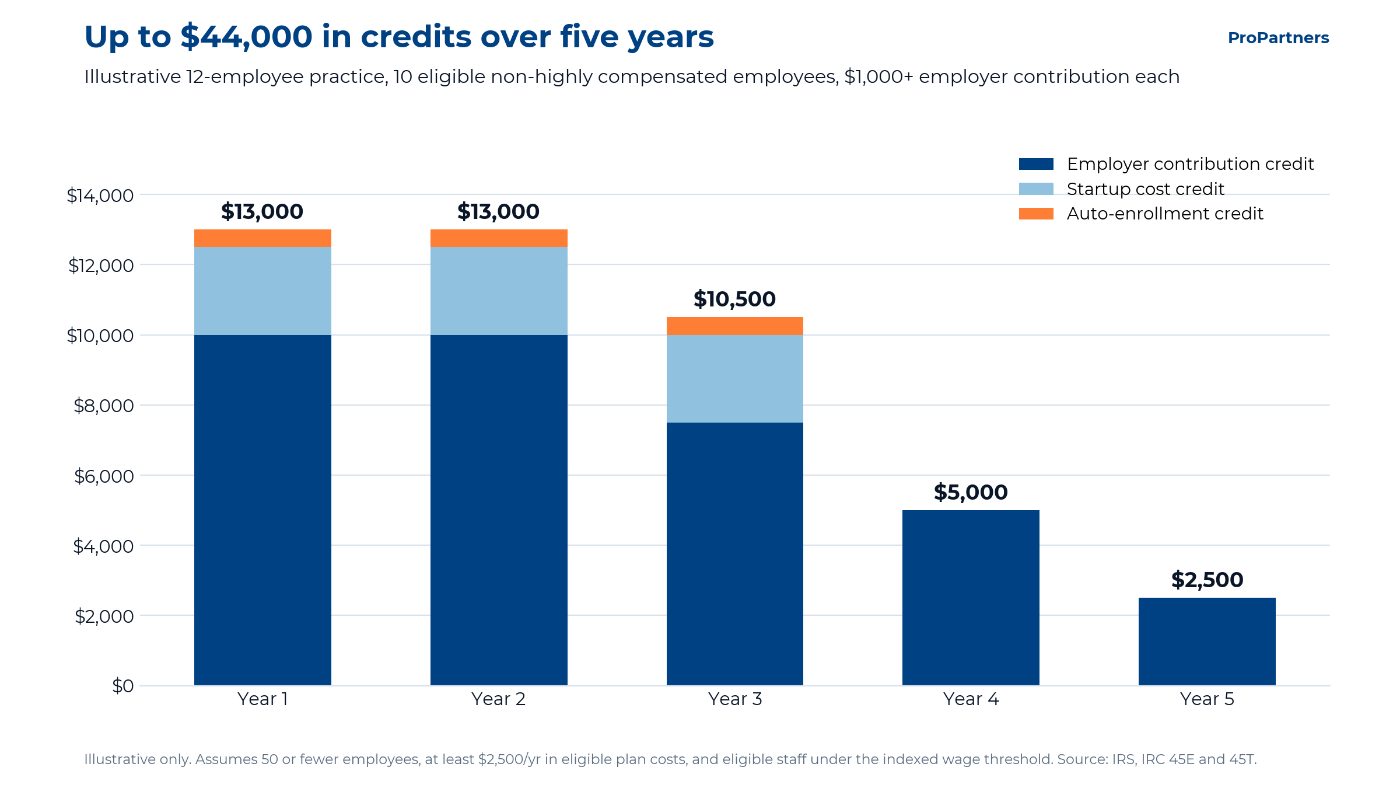
For an illustrative practice with 10 eligible staff, that's $13,000 in credits in each of the first two years and $44,000 over five years. Your numbers will depend on headcount, payroll, and plan costs.
What it means for you as the owner
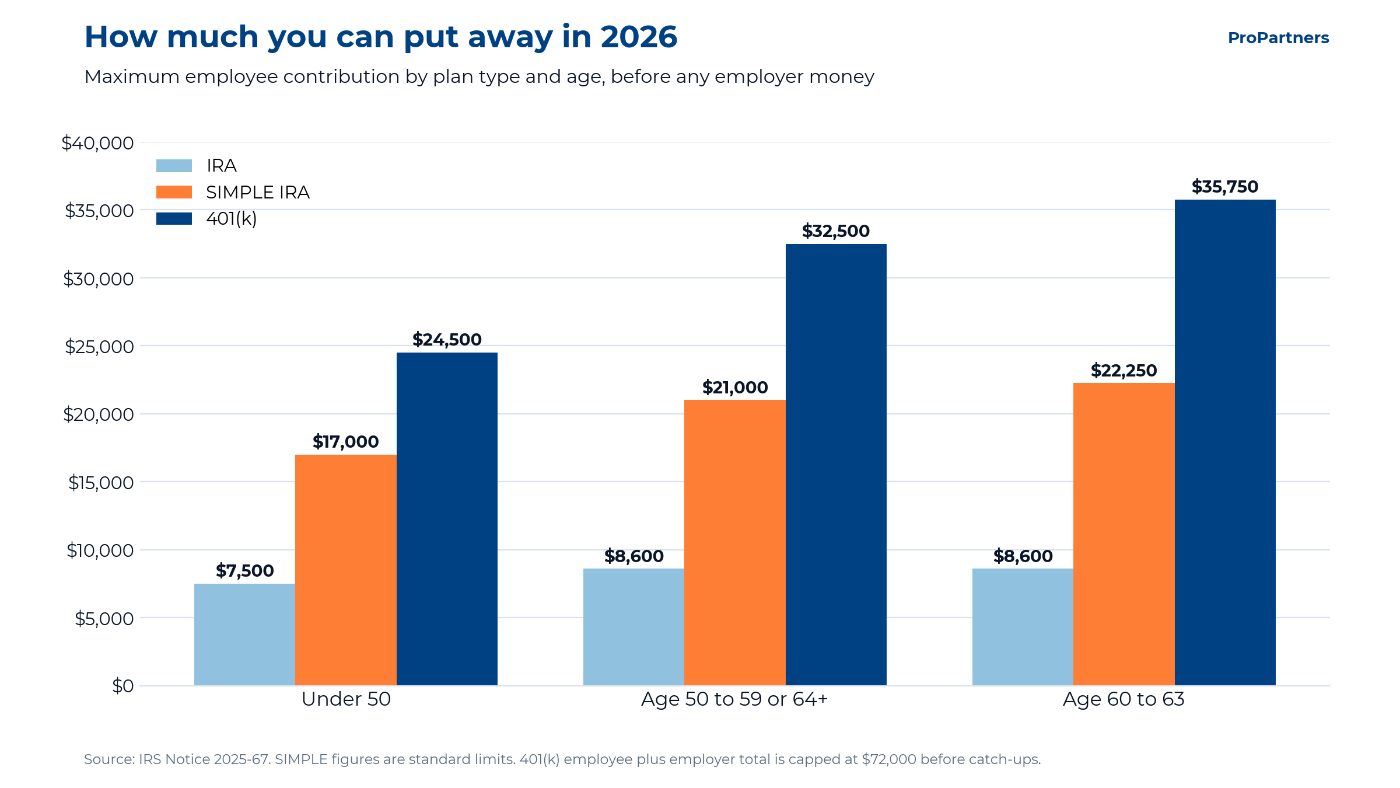 In 2026 you can defer $24,500 into a 401(k), plus $8,000 if you're 50 or older, or $11,250 if you turn 60 through 63 this year. With employer contributions, the total can reach $72,000 before catch-ups.
Already have a 401(k)? Look at a QACA
If your plan keeps failing testing and you get deferrals refunded, a QACA fixes that. It's a safe harbor design, so owners and associates can max out no matter how much staff contribute.
It also costs less than a traditional safe harbor match. The QACA match tops out at 3.5% of pay versus 4%, and it can use a two-year cliff vesting schedule. That helps with support staff turnover. Adding a QACA to an existing plan may also earn the $500 auto-enrollment credit for three years.
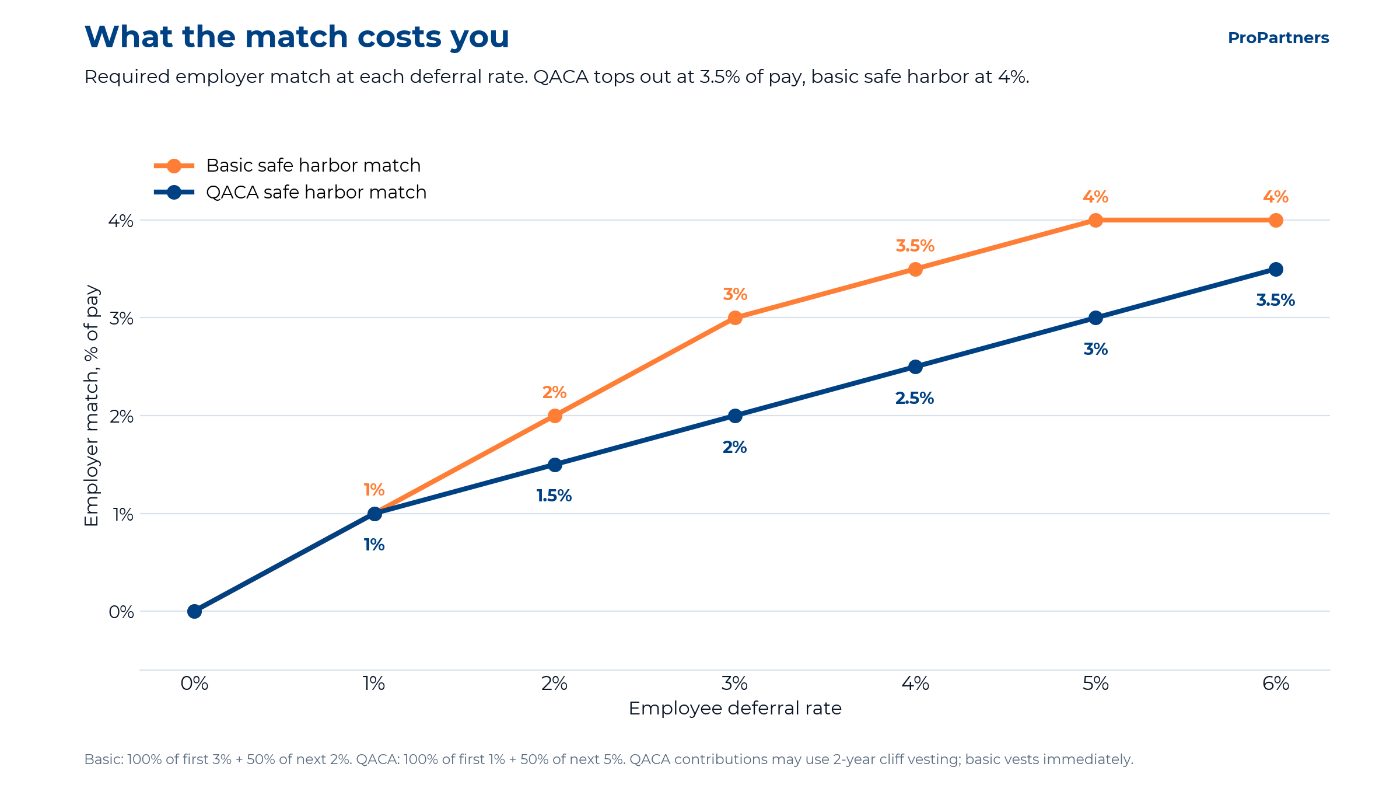 Alt text: Line chart comparing required employer match by employee deferral rate. The basic safe harbor match reaches 4% of pay. The QACA match reaches 3.5% of pay.
Two more 2026 changes
If your practice W-2 wages were over $150,000 in 2025, your catch-up contributions must now be Roth. If your plan has no Roth option, you can't make catch-ups at all.
You can now replace a SIMPLE IRA with a safe harbor 401(k) mid-year, with 30 days' notice to employees.
To have a QACA in place for January 1, 2027, the safe harbor notice has to go out at least 30 days before. Plan decisions need to happen in October or early November.
We'll review your payroll with you and coordinate with your CPA and plan provider to show what your practice would qualify for. Find a time to review your options here.
This article is for general education and is not tax or legal advice. Consult your CPA before making plan decisions.
Sources: IRS Notice 2025-67; IRS Retirement Plans Startup Costs Tax Credit; IRC sections 45E and 45T.
Frequently Asked Questions
Often, yes. Smaller practices get the full credits, and the employer contribution credit alone can cover up to $1,000 per eligible employee in the first two years.
Generally no. A SIMPLE IRA counts as a prior plan. Many switch for the higher contribution limit and possibly the QACA tax credits, with vesting.
Both remove the testing that limits owner contributions. A QACA includes auto-enrollment, has a lower maximum match, and allows a two-year cliff vesting schedule.
No. Your CPA will reduce the deduction by the amount of the credit.
October or early November, so the notice reaches employees at least 30 days before January 1.
Have questions about your practice or plan? A ProPartners advisor can talk through your specific situation, and the consultation is free.
Book a Discovery Call →